

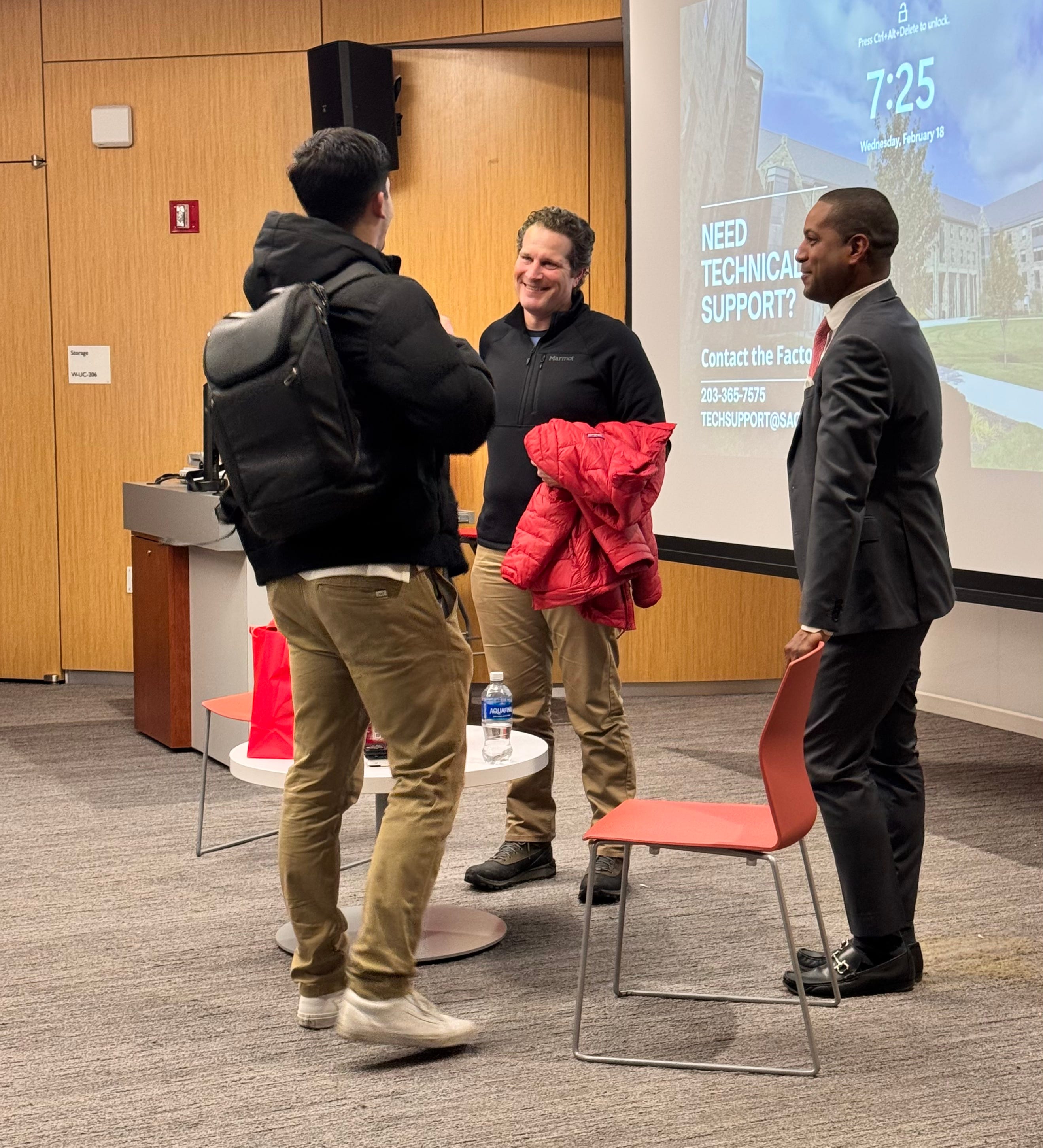
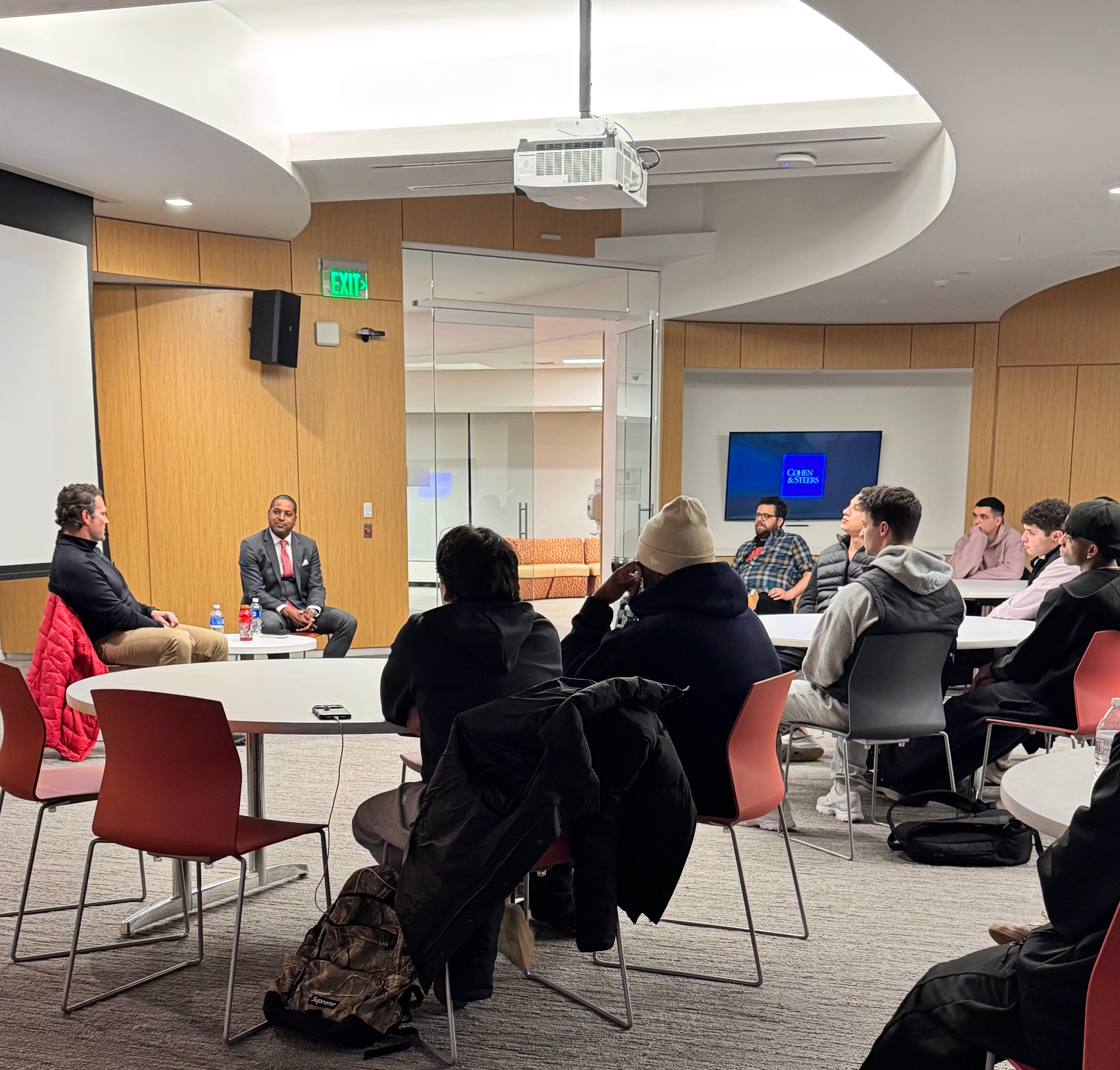
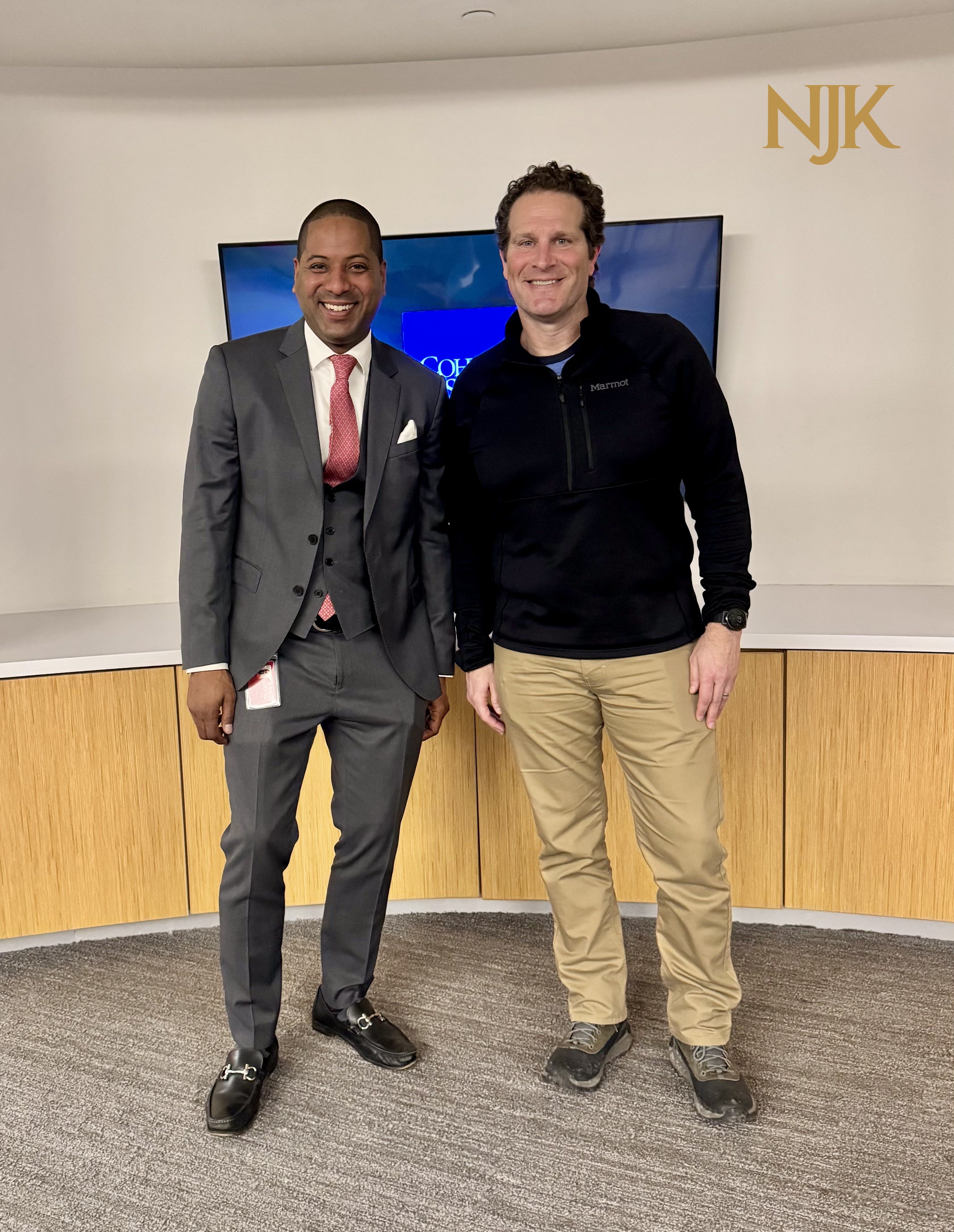
Last week at Sacred Heart University, I hosted Vince Childers—a senior leader at Cohen & Steers, one of the largest investment firms in the world focused on real assets.
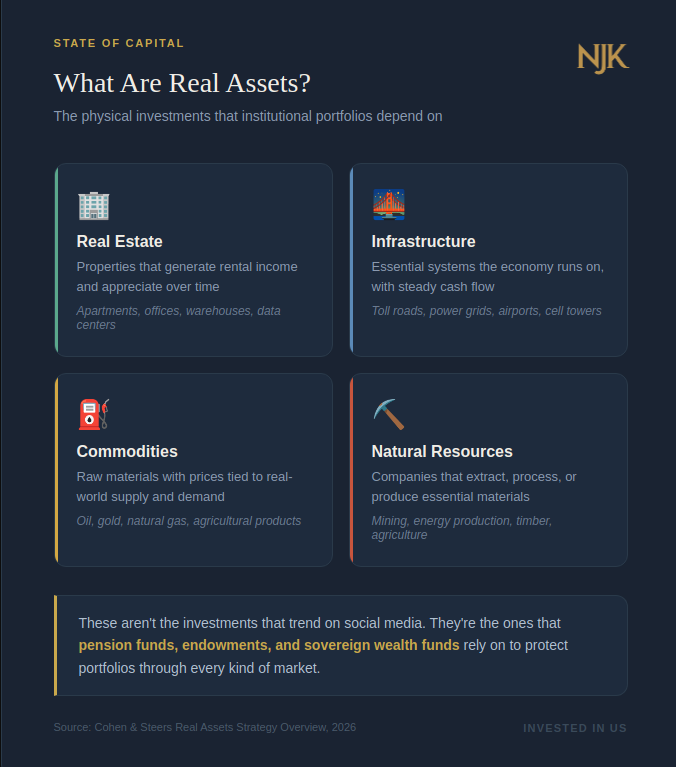
What are real assets? Think real estate, infrastructure (things like toll roads, power grids, and energy networks), and commodities (oil, gold, agricultural products). Physical stuff the economy runs on.
Vince leads the team that decides how to invest across all of these categories. We’re talking about a firm that manages over $93 billion for some of the biggest institutional investors on the planet—pension funds, university endowments, and sovereign wealth funds.
The conversation was supposed to be about careers. It turned into something much bigger.
State of Capital
Why the Biggest Investors in the World Own Things You Can Touch
When most people think about investing, they think about buying stock in companies like Apple or Tesla. But the largest, most sophisticated investors in the world? A big chunk of their money goes into physical things: buildings, roads, energy infrastructure, natural resources.
That’s what Cohen & Steers specializes in. The firm was founded in 1986, is publicly traded on the New York Stock Exchange, and has offices in six countries. They were one of the first to create a mutual fund focused on real estate, and they’ve spent nearly 40 years becoming one of the top firms in this space globally.
Vince has been at the firm since 2013, leading the team that allocates money across these different types of real assets. Before that, he managed over $2 billion in similar strategies at another major firm called AllianceBernstein.
Here’s why this matters for you: the investments that get the most attention on social media and the news aren’t necessarily the ones that the biggest, most experienced investors rely on. There’s a gap between what’s popular and what’s actually anchoring the portfolios that manage retirement money for millions of people. Understanding that gap is a big part of becoming a smarter investor.
Policy & Economics
Why Real Assets Are Getting More Attention Right Now
You don’t have to look far to see why real assets are part of a bigger conversation right now.
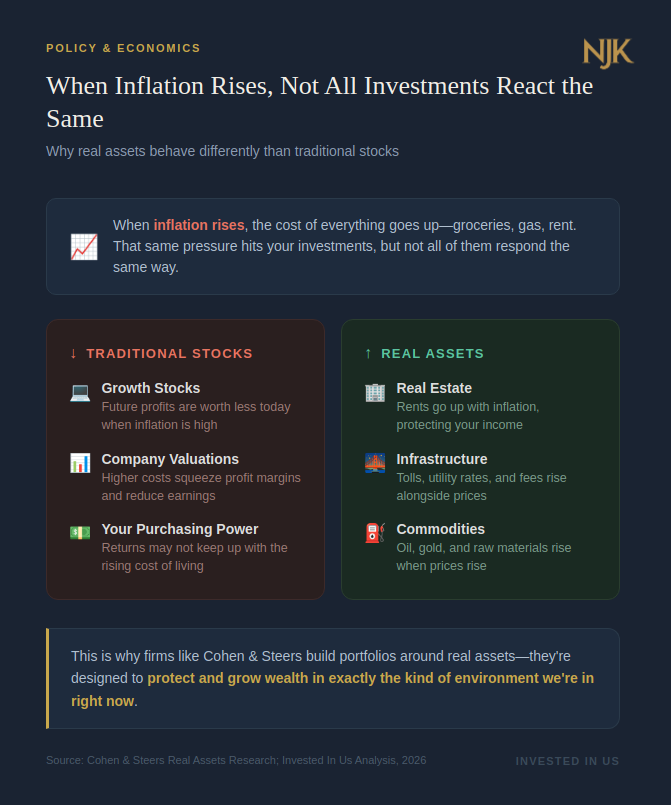
When prices go up across the economy (inflation), it eats into the value of a lot of traditional investments. If you own stock in a company that’s promising big profits five years from now, inflation makes those future profits worth less today. That’s a problem.
But real assets work differently. If you own an apartment building, rents tend to go up with inflation. If you own a toll road, the tolls go up. If you own commodities like oil or gold, their prices tend to rise when everything else gets more expensive too. These investments are tied to real, physical demand not just promises about the future.
Right now, we’re in an environment where inflation is sticking around longer than most people expected, interest rates are higher than they’ve been in years, and the stock market is heavily concentrated in a handful of big tech companies. That kind of concentration is risky. If those few companies stumble, portfolios that aren’t diversified could take a big hit.
That’s exactly the kind of environment where real assets become more valuable…not as a trend, but as protection.
This also connects to what we talked about last week: new policy could open the door for your 401(k) to invest in strategies like these for the first time. Understanding how professional investors think about real assets is becoming directly relevant to your own retirement savings.

The Breakdown
The Career Behind the Capital
Before Vince was leading a multi-billion-dollar investment team, he was grinding through the early years like everyone else.
He started as an associate at Houlihan Lokey, a firm known for complex financial advisory work—the kind of job where you build a foundation in analysis and problem-solving that stays with you. From there he moved to AllianceBernstein, where he worked his way up from junior roles to co-managing over $2 billion. He earned his CFA (one of the hardest professional designations in finance) and his MBA from Carnegie Mellon while raising a family at the same time.
None of that happened fast. None of it was glamorous. But all of it compounded over time.
That was the part of the conversation that hit hardest for the students in the room.
We live in a world that celebrates overnight success and going viral. Vince’s career is the opposite of that. He picked an area most people overlook—real assets—and spent over a decade and a half building the kind of deep expertise that institutions now depend on.
He didn’t chase what was trendy. He got really good at something that matters.
For students, the lesson: build skills that grow over time, not just credentials that look good on paper.
For investors, the same idea applies: the managers worth trusting aren’t the loudest ones. They’re the ones who’ve been doing the work, consistently, for a long time.
The Conversation
Why Access to These Conversations Matters
Here’s something that’s always frustrated me: the people managing the most money in the world almost never talk to everyday people. That knowledge stays behind closed doors—in boardrooms and institutional meetings that regular investors and students never get invited to.
That’s what made this event special. It wasn’t about stock picks or market predictions. It was about giving students and our community a window into how the professional investment world actually works: how careers are built, how firms are structured, and how decisions get made at scale.
Financial education shouldn’t stop at “what’s a 401(k)?” It should include understanding the broader landscape—the firms, the people, the asset classes, and the thinking that shapes how capital moves. That context is what separates informed investors from everyone else.
At NJK Partners, this is what we’re building. We want to connect the people who manage capital at the highest levels with the communities and students who’ve historically been left out of those conversations. Not in theory. In real life.
The full conversation with Vince is now live on this week’s episode of Invested In Us. Whether you’re a student figuring out your career, someone trying to understand investing better, or both—it’s worth a watch.
Closing Thought
You don’t learn about money from textbooks. You learn from the people who actually do it.
I’m grateful to Vince Childers for sitting down with our students and our community. Conversations like this don’t happen often enough, we’re going to keep working to change that.
More to come.