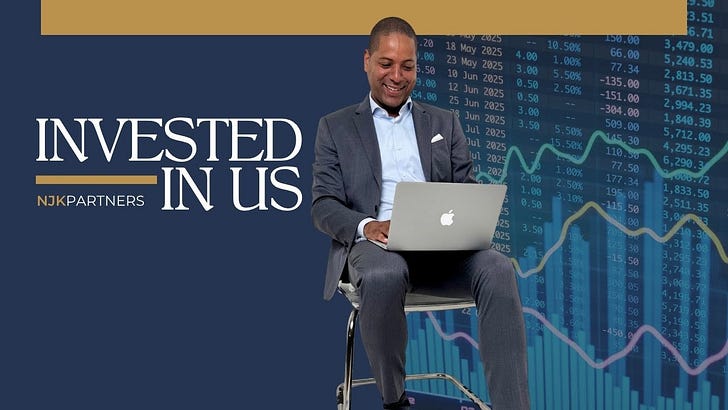
One of the biggest takeaways from last week’s Invested in Us conversation had absolutely nothing to do with real estate, interest rates, or investment returns.
It was about giving back.
Jack Kim of KORE Investments shared something that really resonated with my students, and frankly, with me as well. Guided by the biblical principle of tithing, Jack commits 10% of his firm’s revenue to charitable causes before anything else. Before salaries, operating expenses, or anything else, giving back is a priority.
Think about that for a second.
This isn’t some tax strategy or marketing campaign. It’s a principle he’s built into the way he operates his business. He supports causes that matter to him and organizations that are making a difference in their communities.
And to me, that says a lot about the type of person Jack is, the culture he’s building, and ultimately, the type of people he attracts to his organization.
🎥 Watch the full episode
Because building a successful investment firm isn't just about attracting capital. It's also about attracting, developing, and retaining great people.
Last week, we had the pleasure of welcoming Jack Kim, founder of KORE Investments, and Eric Morgan, who leads acquisitions for the firm, to Invested in Us.
Every time I meet or speak with Jack, I walk away with a wealth of information. This conversation was no different.
We covered just about everything: real estate investing, dealmaking, entrepreneurship, building a career, managing relationships, and what it takes to build a successful investment business.
Here are a few things that stood out to me.
Your reputation might be your most valuable asset.
Jack didn’t start out managing a billion-dollar real estate portfolio.
His first deal was financed with the help of friends and family. He started in multifamily real estate and eventually expanded into larger commercial real estate investments, including office properties.
Like most successful investors, he had to start somewhere.
But one thing that became clear throughout our conversation was just how much importance he places on his reputation.
In private markets, reputation can be just as important as access to capital.
Sometimes deals get done because of who you are, not just what you’re willing to pay.
A seller might choose to transact with a buyer they trust. A lender might be more comfortable financing an experienced operator. And investors may be more willing to commit capital to someone who has consistently demonstrated sound judgment and integrity.
Over time, that reputation compounds.
Instead of constantly chasing deals and capital, opportunities and relationships begin coming to you.
There’s a financial lesson here, too. Access to proprietary or relationship-driven deal flow can create a meaningful competitive advantage. Less competition may translate into more favorable purchase terms, better financing structures, and ultimately, more attractive risk-adjusted returns.
Of course, the numbers still have to make sense. A great reputation doesn’t turn a bad investment into a good one.
But it can certainly help get you into the room.
Early in your career, you almost have to be flawless. Unfortunately, that's when you're most likely to make mistakes.
This was probably one of the more difficult lessons from our conversation.
When you’re just getting started as an investor or entrepreneur, you don’t have much of a track record.
And yet, that’s precisely when you’re asking people to trust you with their capital.
It’s a catch-22.
How do you establish a track record if nobody is willing to give you an opportunity? And how do you convince someone to give you an opportunity without a track record?
The reality is that you don’t have much room for error early on.
If you’re managing outside capital, your first few investments can have an outsized impact on your ability to raise money in the future.
Think about the difference between an investor who successfully executes their first three transactions and one who experiences significant losses or operational issues before establishing credibility.
Even if both become better investors over time, their fundraising journeys may look very different.
That’s why underwriting discipline, capital preservation, appropriate leverage, and downside protection matter so much.
It’s not enough to ask how much money an investment can make.
You also have to ask:
What happens if revenues decline?
What happens if interest rates remain elevated?
Can the property support its debt obligations?
What happens if our exit takes longer than anticipated?
How much capital could we lose if our assumptions are wrong?
In investing, surviving long enough to build a track record is an accomplishment in itself.
You don’t need every investment to be a home run. But you do need a repeatable process that gives you a reasonable chance of protecting capital and producing attractive returns over time.
There is no substitute for putting in the work.
We also spent a considerable amount of time discussing work ethic.
Jack and Eric shared stories about the hours they’ve put into building the business. Long days, late nights, and a commitment to being present and working together.
Their team works in the office five days a week, and collaboration is clearly an important part of their culture.
Now, I realize there’s an ongoing debate about remote work versus being in the office. And frankly, I don’t think there’s one model that works for every organization.
But what stood out to me was the emphasis on accountability, teamwork, and execution.
Real estate investing requires a number of disciplines to work together.
The acquisitions team needs to source and underwrite opportunities. Financing partners need to structure the capital stack. Asset management needs to execute the business plan. Property operations need to deliver results. And someone needs to make sure the entire organization is moving in the same direction.
A deal that looks terrific in Excel can become a terrible investment if the execution falls apart.
And that’s one of the distinctions between simply buying an asset and building an investment management business.
Finding a good deal is one thing. Building an organization capable of repeatedly finding, financing, operating, and eventually exiting good deals is something entirely different.
That requires people, systems, processes, and a whole lot of work.
Culture is part of the investment process.
I want to circle back to Jack’s commitment to giving.
Because the more I thought about it, the more I realized there’s a broader business lesson here.
Most people evaluate investment firms based on assets under management, historical performance, or the size of their transactions.
And those things certainly matter.
But what about the people making the decisions?
What about the culture of the organization?
What about how management treats employees, investors, business partners, and the communities where they operate?
The quality of an investment organization can influence everything from employee retention to operational execution and ultimately investment performance.
If you’re able to attract talented people who believe in the mission, work well together, and are willing to stay for the long term, that can become a competitive advantage.
And Jack’s approach to philanthropy is a reminder that financial success and social responsibility don’t have to be mutually exclusive.
You can build a profitable business while also making a meaningful contribution to the communities around you.
In fact, those two objectives can reinforce each other.
Relationships compound just like investments.
One of the things I love about conversations like these is how often the discussion comes back to relationships.
Jack’s journey began with friends and family backing his first investment.
Over time, those relationships expanded into a much larger network of investors, lenders, brokers, operating partners, and other professionals.
This is something I believe doesn’t get discussed enough in finance.
We spend a tremendous amount of time discussing compound interest, asset allocation, diversification, and investment returns.
But relationships compound, too.
A relationship you build today might not produce an immediate opportunity. It might not produce anything for years.
But if you consistently show up, do what you say you’re going to do, treat people fairly, and create value, that relationship can eventually open doors you never anticipated.
And unlike a financial asset, one strong relationship can lead to dozens of others.
For anyone interested in real estate, private equity, entrepreneurship, or investment management, I think that’s an incredibly important lesson.
Your network might help you get your first opportunity. Your execution and reputation determine whether you get the next one.
My final thoughts
I started Invested in Us because I wanted to make conversations like these more accessible.
Not everyone gets an opportunity to sit down with people who have spent decades building investment businesses, managing significant amounts of capital, and navigating the ups and downs of financial markets.
And I don’t believe those conversations should be reserved for people who are already wealthy or well-connected.
Whether you’re a college student trying to break into finance, an entrepreneur working on your first acquisition, or an experienced investor looking to sharpen your process, there’s something to learn from people who have actually done the work.
What I appreciated most about Jack and Eric was their willingness to share not just their successes, but the challenges, mistakes, and lessons along the way.
Because when you strip away the billion-dollar portfolios, the institutional relationships, and the impressive transactions, the fundamentals are pretty straightforward.
Put in the work. Protect your reputation. Surround yourself with good people. Remain disciplined with other people’s capital. And don’t forget to give back along the way.
Simple principles. Not always easy to execute.
A big thank-you to Jack Kim and Eric Morgan for being so generous with their time and sharing their experiences with our students and the broader NJK community.
If you missed the conversation, be sure to watch the full episode of Invested in Us on YouTube.
And if you haven’t already, subscribe to our newsletter and join us for future conversations with investors, entrepreneurs, and industry leaders.
You don’t need to be a billionaire to learn from one.
We’re all invested in us.
— NJK Partners
We’re teaching money the way it should’ve been taught to us. If this issue helped you understand what’s happening, share it with someone who could use it.
For general education, not individualized investment or tax advice. Investing involves risk, including loss of principal.
→ Schedule a call with NJK Wealth Management: No minimums. No commissions. No judgment. Just a real conversation about your money.